
Exam Boost 08 —Speaking Rehearsal
A full A2 Key Speaking rehearsal: Part 1 interview and Part 2 picture discussion, with timings, examiner scripts and repair phrases. Revision only · recycles Modules 05–06 — no new language.
A2 Key parts in this lesson
Why this lesson now? Exam-focus hour attached to Module 06.
Your level · You are here
Exam Boost · Performance Session
A progress checkpoint, not a test.
Practise the language from this part of the course again. Try challenges, mini-tasks and longer speaking turns. Do not worry about small mistakes. You can replay any part.
Get ready · 01
5 minGet talking — no pressure
What's the one part of a speaking test that makes you most nervous?
How long do you think A2 Key Speaking Part 1 lasts? Guess, then check.
Pick ONE target: answering with a reason, asking a partner a question, or staying calm if you get stuck.
Grammar recap · 02
8–10 minExtending answers with 'because' (Modules 5–6 recycle)
Never stop at one word — add a reason with because, or an example with for example.
- 1Modules 5–6 introduced because and for example as simple linkers.
- 2In the A2 Key Speaking test, a one-word answer like Yes or Football scores much lower than the same answer extended with a reason.
- 3This lab reuses that language for a very practical purpose: turning short answers into full ones under exam conditions.
I like football because it's a team sport.
I live in a small flat, for example, it only has one bedroom.
I go to work by bus because it's cheaper than a taxi.
My favourite season is summer because I can go swimming.
I don't like spicy food because it's too strong for me.
Challenge 1.I like football ___ it's exciting to watch.
Challenge 2.I go to work by bike, ___ it's good exercise.
Challenge 3.My town is quiet, ___ there aren't many cars.
Challenge 4.I love cooking, ___, I made a cake last weekend.
Challenge 5.I don't like winter ___ it's too cold.
Build the sentence → spot the natural chunks → say it aloud → reply like a real conversation.
1.Rebuild the sentence — then say it aloud.
2.Rebuild the sentence — then say it aloud.
3.Rebuild the sentence — then say it aloud.
Quick check 1.Which answer would score better in Speaking Part 1?
Quick check 2.Which sentence uses 'for example' correctly?
Vocabulary recap · 03
5–7 minRecycle your toolkit
to pause because you're not sure what to say
What do you say in English when you hesitate?
to say something again
What can you ask the examiner if you don't understand a question?
to do something one after another, not at the same time
Why is it important to take turns in Speaking Part 2?
to have the same / a different opinion as someone else
Do you agree or disagree that speaking tests are stressful?
a filler word used to give yourself time to think
Use 'well…' at the start of an answer right now.
What to do
- 1.Revision only — every word here comes from Modules 5–6.
- 2.Match each one with its meaning.
Tap an item on the left, then tap its match on the right.
What to do
Sort the recycled words by the module where you first met them.
Activation · Personalise · Recycle
Reactivate Modules 5–6 language out loud — nothing new here, just faster recall for speaking.
Ask your partner
- What do you say in English when you hesitate?
- What can you ask the examiner if you don't understand a question?
- Say one sentence starting with 'In my opinion…'
"Why is it important to take turns in Speaking Part 2?"to take turns
Do you agree or disagree that speaking tests are stressful? Give a reason.
Write 25–35 words about how you feel before a speaking test using BOTH recycled phrases.
Pronunciation polish · 04
3–4 minNatural repair phrases when you get stuck
Say Sorry, could you repeat that? or Let me think… clearly and calmly — pausing is fine, silence is not.
- • Sorry, could you repeat that, please?
- • Sorry, what does that word mean?
- • Let me think… yes, I think…
- • Sorry, I don't understand. Can you say it again?
- • That's a difficult question. Well, I think…
Reading challenge · 05
8–10 minReading & Writing Part 3 — Why rehearsal beats revision for Speaking
Read along — listen to the text
Tap play to listen. Replay as many times as you need.
Many learners prepare for the A2 Key Speaking test by studying grammar rules or memorising vocabulary lists. This helps, but it isn't the same as rehearsal — actually speaking out loud, under time pressure, with another person.
In A2 Key Speaking Part 1, an examiner asks short personal questions: your name, where you live, your job or studies, your free time. Candidates who only revise silently often freeze when a real voice asks them a real question. Candidates who rehearse out loud, even with a friend or a mirror, answer more naturally and extend their answers with a reason.
In Part 2, two candidates look at a picture or prompt sheet together and ask each other questions. This part fails without rehearsal, because it needs a skill books can't teach alone: taking turns, listening to a partner, and reacting naturally. The best preparation is simple — talk out loud, with a partner, every single day before the test.
Challenge 1.What does the text say silent revision alone does NOT prepare learners for?
Challenge 2.What kind of questions does the examiner ask in Speaking Part 1?
Challenge 3.Why does Speaking Part 2 need rehearsal, according to the text?
Q1.The text says silent revision is exactly the same as rehearsal.
Q2.In Speaking Part 1, the examiner asks short personal questions.
Q3.The text recommends talking out loud with a partner every day before the test.
What to do
- 1.Reading & Writing Part 1 — Read each notice and choose A, B or C.
- 2.About 5 minutes.
SPEAKING REHEARSAL TODAY
Bring a partner. We will practise Part 1 and Part 2 out loud, in pairs, all lesson.
1.What does the poster ask students to bring?
2.What does the teacher remind students to do?
Speaking practice in progress. Please talk quietly if you come in.
3.What does the sign ask visitors to do?
4.What does the email tell students about the Speaking test?
REMEMBER
If you don't understand, say 'Sorry, could you repeat that?' — it's completely normal.
5.What does the noticeboard suggest doing if you don't understand?
Listening challenge · 06
8–10 minListening Part 3 — Two students rehearse Speaking Part 1
Listening audio
Tap play to listen. Replay as many times as you need.
Show transcript
Mia:Let's practise Part 1 questions. Ready? Where do you live?
Sam:I live in a small town near the coast, because my family has always lived there.
Mia:Good, that's a full answer! What do you do in your free time?
Sam:Well, I usually play basketball, because it's a great way to relax after school.
Mia:Nice use of 'well' and 'because'. My turn now — ask me one.
Sam:OK. Do you prefer studying alone or with friends?
Mia:Sorry, could you repeat that? ... Oh, I prefer studying with friends, because we can help each other.
Sam:Perfect. You used a repair phrase and still gave a full answer. That's exactly what the examiner wants.
Challenge 1.Why does Sam live near the coast?
Challenge 2.What does Sam do in his free time?
Challenge 3.What repair phrase does Mia use?
What to do
Tick every speaking-rehearsal word or phrase you hear in the dialogue.
Skills challenge · 07
5 minExtending answers and repairing conversation breakdowns
Every answer needs a reason. Every pause needs a repair phrase, not silence.
Task
This clinic trains learners to rehearse both A2 Key Speaking parts out loud, under time pressure, so the exam format itself is no longer a surprise on the day.
Example
Weak answer: Football. Strong answer: 'I really enjoy playing football, because it's a good way to spend time with my friends after school.'
Writing challenge · 08
5 minShow what you can do
Q1.Type ONE word: 'I like tea ___ it's warm and relaxing.'
Q2.Type ONE word: 'Sorry, could you repeat ___, please?'
Q3.Type ONE word: 'In my ___, speaking practice really helps.'
Q4.Type ONE word: 'Let's take ___ asking questions.'
Reading & Writing Part 7 (picture story, 35+ words). Prompt: Write a short story that begins: 'Before the speaking test, Leo felt very nervous.' Use past simple, a simple linker (and, but, because, so), and at least one repair phrase in speech marks.
Your writing draft
0 words SavedShow model answer & examiner comment
Before the speaking test, Leo felt very nervous. He walked into the room, and the examiner smiled and asked his name. Leo answered, but then he didn't understand the next question, so he said, 'Sorry, could you repeat that, please?' The examiner repeated it slowly, and Leo answered clearly. By the end, he felt much calmer, because the test felt more like a normal conversation.
Examiner comment
| 5 | All content points covered; consistent style; range of structures; minor errors only. |
| 3 | Content mostly covered; mostly suitable style; some range; errors don't stop the reader understanding. |
| 1 | Limited content; intrusive errors; very basic structures; under-length. |
What to do
- 1.Reading & Writing Part 6 — Reply to this message in 25 words or more.
- 2.Cover ALL three notes.
Hi! Are you ready for our Speaking rehearsal? Which part makes you more nervous, Part 1 or Part 2? What can I do to help you prepare?
Your reply must cover:
- Give a clear answer about readiness
- Name Part 1 or Part 2 and give a short reason
- Ask for one specific type of help
Show model answer
Hi! I feel quite ready, but Part 2 makes me more nervous, because I sometimes don't know what to ask my partner. Could we practise asking questions about a picture together this week? That would really help. Thanks, Sam
Communication lab · 09
10–15 minTalk it out
Speaking Part 2 — Look at the picture together with your partner. Ask and answer questions about it, then discuss your opinions. Take turns and use repair phrases if needed.
What to do
Choose the most natural Speaking Part 2 answer.
- ExaminerNow, talk together about the picture. What can you see?
- Candidate A_______________
- Candidate BI can see a family having a picnic. Do you like picnics?
- Candidate A_______________
What to do
- 1.Speaking Part 1 — the examiner asks short personal questions (about 3–4 minutes total).
- 2.Answer naturally, then add one extra detail with 'because'.
Phase 1 — short factual questions
1.Examiner: "What's your name?"
2.Examiner: "Where do you live?"
Tip: Add ONE detail with 'because'.
3.Examiner: "What do you do in your free time?"
Tip: Use present simple, then 'because'.
4.Examiner: "Do you prefer studying alone or with friends?"
Tip: Say your preference, then give a reason.
Phase 2 — extended question (aim for 3–5 sentences)
Examiner: "Tell me about a typical day for you."
Tip: Aim for 20–30 seconds. Use time linkers: first, then, after that.
Show model extended answer
A typical day for me starts early, because I have to catch the bus at eight o'clock. First, I go to school, and then I usually have lunch with my friends. After that, I go home and do my homework, because I like to finish it before dinner. In the evening, I sometimes watch a film, because it helps me relax before bed.
What to do
- 1.Speaking Part 2 — Look at the picture together with your partner.
- 2.Describe what you can see, then ask and answer the discussion questions.
- 3.Give simple opinions and preferences, and take turns.
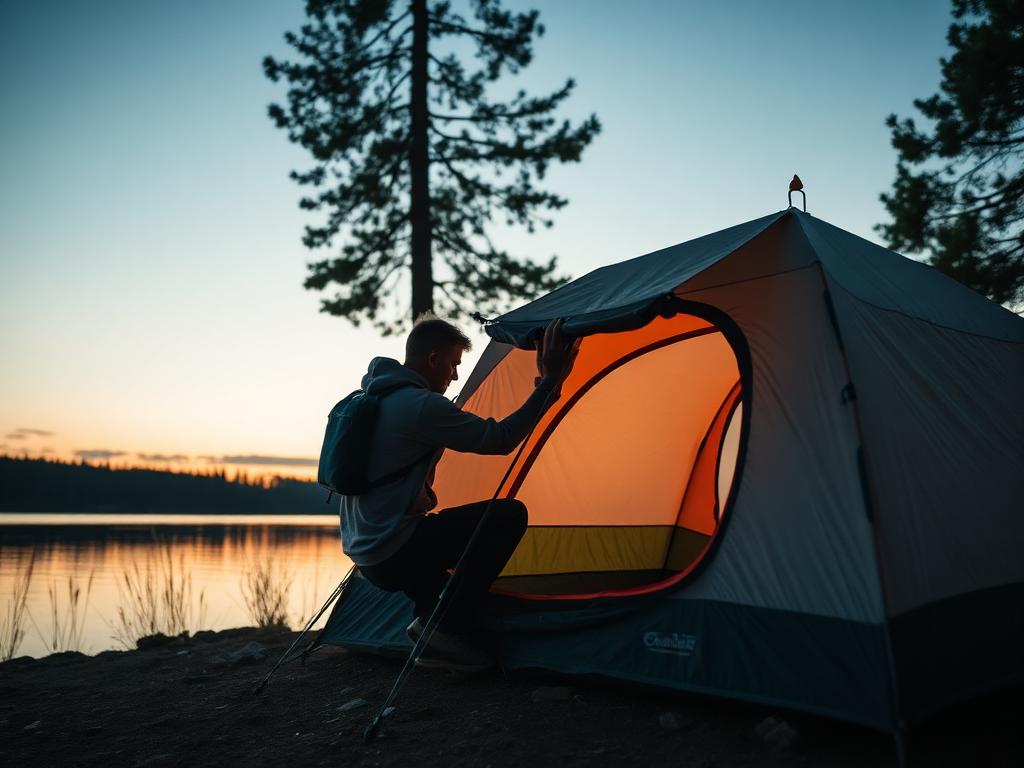
Rehearsing Speaking Part 2
Need help? Show prompts (try describing with no help first)
- • What can you see in the picture?
- • Ask your partner what they can see.
- • Do you enjoy speaking practice with a partner?
- • What helps you feel less nervous?

Practising alone at home
Need help? Show prompts (try describing with no help first)
- • What can you see in the picture?
- • Do you think practising alone helps?
- • Ask your partner if they practise speaking at home.
- • What's more useful: practising alone or with a partner?
Useful phrases
- • In the picture I can see…
- • What about you?
- • I think… because…
- • Do you agree?
- • In my opinion…
Show model 1-minute description
In the picture I can see two students looking at a card together and talking. I think practising with a partner is really useful, because you can hear real questions and practise answering them, not just reading them silently. What about you — do you prefer practising alone or with a partner?
Optional · Teacher-led
Teacher Activities
Run this lab as a real speaking test simulation: pair students, give strict timings for Part 1 (3–4 minutes) and Part 2 (5–6 minutes), and use the assessment criteria below to give quick feedback. ~40 min total
Keep it going · 10
Take-homeExtend it at home
Self-study — everything you need is included below. All four skills are covered so you keep the spiral going between lessons; pick the order that suits you.
Part 1 rehearsal — record yourself answering 4 personal questions, always adding a reason.
Your response
0 words SavedMaterials included
Questions
Attempt the task first, then check your answers.
Reading & Writing Part 6 practice — reply to the teacher's message in 25+ words. Cover all three notes.
Your response
0 words SavedMaterials included
Stimulus message
3 notes
Attempt the task first, then check your answers.
Part 2 partner drill — with a partner, ask and answer 5 questions about a photo of your choice, taking turns.
Your response
0 words SavedMaterials included
Structure
Attempt the task first, then check your answers.
Listening recycling drill — read the Mia/Sam dialogue aloud twice, focusing on natural repair phrases.
Your response
0 words SavedMaterials included
Dialogue
Attempt the task first, then check your answers.
Wrap-up · 11
2–3 minWhat you can now do
- A2 Key Speaking Part 1 is a short examiner-led interview about personal information — always extend answers with 'because'.
- A2 Key Speaking Part 2 is a picture/prompt discussion with a partner — take turns asking and answering.
- Repair phrases like 'Sorry, could you repeat that?' are normal and expected — silence is not.
- Reading & Writing Part 6 = cover every note in 25+ words; Part 7 = a short story in 35+ words.
- Rehearsing out loud with a partner prepares learners better than silent revision alone.
Need more practice?
Optional · your lesson progress stays the sameChecking your writing
Practise this exam skill
Story and article language
Practise this exam skill
Telling a story in the past
Practise this exam skill